
Two old villages, one town, and a lot of water
Tree Service in Leo-Cedarville, IN
Wooded lots on the river, the reservoir and a protected creek.
- Every estimate done in person around Fort Wayne and Allen County, Indiana
- The written quote lists what is and is not included
- Debris and stump handling decided in advance
Wooded Lots Along the Water
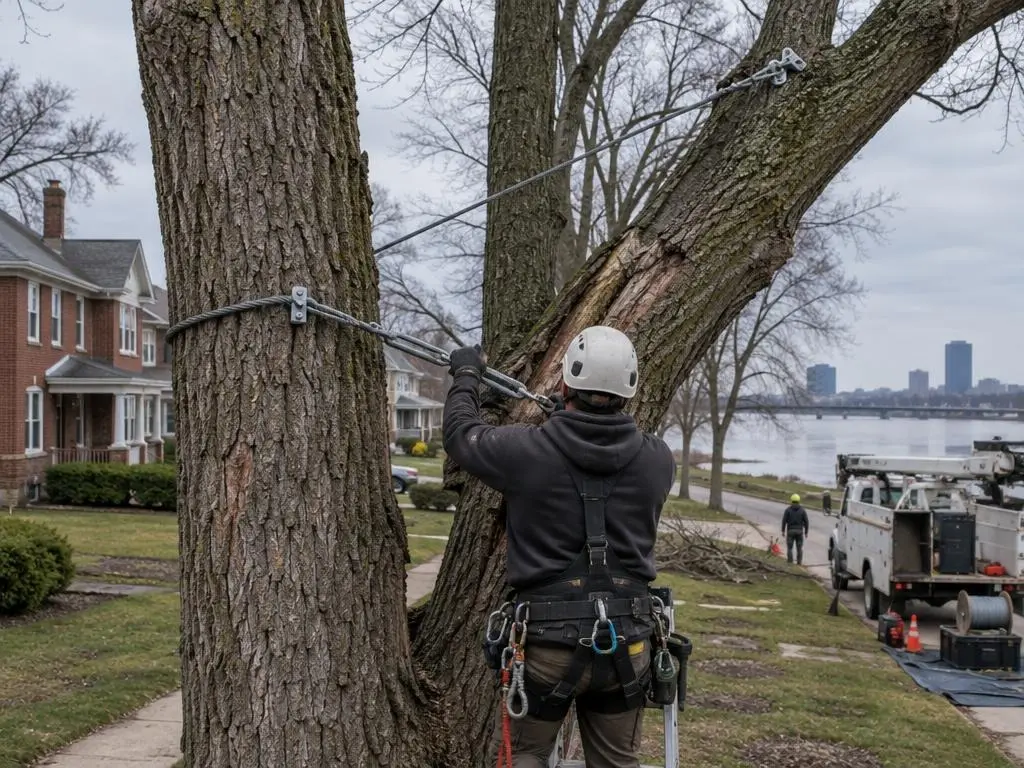
Tree Service in Leo-Cedarville often means working on sloped, wooded ground near water. The town lies along the St. Joseph River and the Cedarville Reservoir, and Cedar Creek joins the St. Joseph just below the Cedarville Dam. Cedarville was platted in 1838 and Leo, first called Hamilton, in 1849. The two villages incorporated together as Leo-Cedarville in 1996. Many homes here sit on large lots carved out of woods, where the trees were there long before the house.
A creek the state protects
Cedar Creek is one of only three streams in Indiana's Natural, Scenic and Recreational Rivers system, and its lower 13.7 miles, the stretch that runs through this area to the St. Joseph, are designated an Outstanding State Resource Water. For a homeowner with a creekside lot, that is a reason to be careful about where brush, sawdust and grindings end up. We keep debris out of the water, avoid dragging logs down the bank, and leave root systems in place on slopes where pulling a stump would loosen soil that is holding the bank together.
Trees that lean toward the river
Trees on a riverbank grow toward the light over the water, and over decades many end up leaning hard in that direction. A lean is not always a defect; plenty of trees grow that way and stay stable. What worries us is a lean that changed recently, cracks in the soil on the uphill side, or roots lifting out of eroded bank. When a leaning tree has to come down near the water, it is usually taken apart from the top in pieces and lowered on ropes, so nothing drops into the channel or slides down the slope.
Woodlot hazards near homes
Wooded lots collect problems quietly: dead ash left from the emerald ash borer wave, hollow oaks, and trees with root damage from the original house construction. Purdue Extension notes that ash becomes extremely brittle after it dies, and the longer one stands, the more dangerous it is to climb. We often recommend a walk-through of the trees within striking distance of the house, deck and driveway. You can then decide which to remove now and which to keep an eye on.
What a typical Leo-Cedarville job includes
Most requests here fall into a few groups: removing hazard trees near the house, clearing view corridors toward the water by thinning rather than clear-cutting, raising low limbs over long driveways, and storm cleanup when a large tree drops across a lane. We describe each tree on the written estimate so it is clear what stays and what goes.
Reservoir-side and riverside access
Waterfront lots often have one way in: a narrow drive, a steep yard, or a path between the house and a neighbor's garage. Before we quote, we work out how a chipper and truck will reach the tree, where wood can be staged, and whether a long rope line or a small loader is needed to bring brush up the slope. Those details change the time a job takes more than the size of the tree does, so they go into the written estimate instead of being discovered on the day.
Getting started
Send photos through the form or call (260) 305-9252, and we will set a time to walk the lot with you. If any trees are near the road, we will also check which ones sit in the county right-of-way before we quote.
Leo-Cedarville Waterways and History
- River and reservoir. The town lies along the St. Joseph River and the Cedarville Reservoir, and Cedar Creek joins the St. Joseph below the Cedarville Dam.
- Protected creek. Cedar Creek is one of three streams in Indiana's Natural, Scenic and Recreational Rivers system, and its lower section from river mile 13.7 down is an Outstanding State Resource Water.
- Two villages merged. Cedarville was platted in 1838 and Leo in 1849; the two incorporated together in 1996. The town had 3,624 residents in 2020, up from 2,782 in 2000.
Our Services in Leo-Cedarville, IN
Leo-Cedarville Questions
Can I clear trees on my creek bank to open a view?
Selective thinning and limbing up is usually a better choice than clearing the bank. Roots hold the soil in place, and removing them on a slope can lead to erosion. We can open sight lines while leaving the trees that protect the bank.
A tree fell across our lane in a storm. Can you just cut a path first?
Yes. We can open the drive first so you can get in and out, then come back for the rest of the cleanup and the stump if you want them handled.
Do you remove leaning trees over the river?
We do, by lowering the tree in sections so nothing falls into the water. We look at the bank first, because sometimes the safer choice is to cut the tree and leave the stump and roots in the slope.
Free Estimates in Leo-Cedarville, IN
Free on-site estimates for Leo-Cedarville wooded and waterfront lots.
Tree Service Near Leo-Cedarville
- Tree Service in Fort Wayne, IN
- Tree Service in New Haven, IN
- Tree Service in Huntertown, IN
- Tree Service in Grabill, IN
- Tree Service in Woodburn, IN
- Tree Service in Monroeville, IN
- Tree Service in Harlan, IN
- Tree Service in Hoagland, IN
- Tree Service in Churubusco, IN
- Tree Service in Columbia City, IN
- Tree Service in Auburn, IN
- Tree Service in Garrett, IN
- Tree Service in Waterloo, IN
- Tree Service in Huntington, IN
- Tree Service in Roanoke, IN
- Tree Service in Bluffton, IN
- Tree Service in Ossian, IN
- Tree Service in Decatur, IN
- Tree Service in Kendallville, IN
- Tree Service in Aboite Township, IN
- Tree Service in Avilla, IN
- Tree Service in Markle, IN